For years Taiwan has urgently requested the sale of new F-16C/D Block 50/52+ aircraft to supplement its aging fighter force of 145 older F-16A/B block 20 aircraft first ordered in 1992. The Taiwanese air force is incredibly outnumbered. In total the Republic of China Air Force operates 359 fighter aircraft including the soon to be phased out F-5 Tiger II. Comparatively, the aerial armada assembled by The People's Liberation Army Air Force consists of nearly 1,300 fighter aircraft. Although China still operates fighters designed in the 1960s (J-8 is copy of Soviet designed Mig 21), recently China has spent tens of billions of dollars developing and acquiring advanced 4th generation fighter designs. In response to the increased capabilities of the Chinese Air Force, Taiwan has submitted a proposal in which it would purchase 66 of the new Lockheed F-16C/D Block 50/52+ fighters. The Obama Administration deemed such a sale impossible. Given the recent $6.4 billion dollar arms sale between the U.S and Taiwan in 2009, another sale of new equipment of this magnitude would not be tolerated by Beijing. Ties between the United States and China are delicate as strategic dialogue between the two nations has finally resumed. (China typically cuts strategic dialogue with the U.S in response to arms sales to Taiwan such was the case in 2009) However, under the Taiwan Relations Act, the United States is obligated to provide Taiwan with adequate defensive equipment (e.g. "to provide Taiwan with arms of a defensive character" - Taiwan Relations Act, 1979) Thus, the Obama Administration decided to compromise. Under the Obama Administration's proposal, Taiwan's fleet of 145 F-16A/B Block 20 fighters would receive numerous upgrades worth $5.3 billion dollars. Although China naturally condemned the proposed upgrades, they haven't taken serious action as with previous arms sales. This hints that Beijing has been placated for the moment. Ultimately, the decision to upgrade Taiwan's current fighters rather than allowing the purchase of new jets is the right call. Not only will the United States not loose the recent diplomatic gains made with China, but also the Taiwanese will be in a better position to defend themselves. The new upgrades for Taiwan's jets will be explained in detail along with a military recommendation that helps ensure Taiwan's continued autonomy.
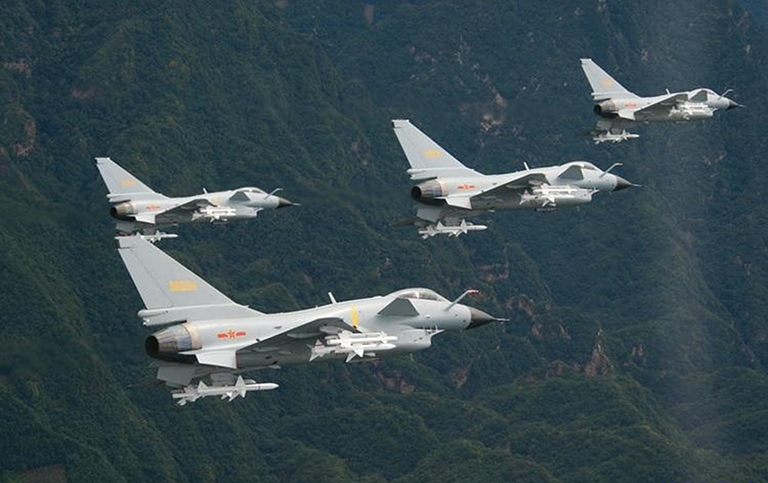
Image 2: Chinese built J-10 fighters shown below. As with most Chinese designs they are heavily "influenced" by foreign designs. The tail section of the J-10 draws upon the F-16 design (Pakistan likely let China examine some of its F-16s which is yet another reason not to sell Pakistan more high grade arms) while many other aspects of the plane have been taken from the Israeli designed IAI Lavi fighter.
Proposed F-16 Upgrades
Although Taiwan is not receiving any new jets, the proposed upgrade package will essentially grant the Taiwanese F-16s comparable capabilities to the Block 50/52+ variants they originally requested. The proposed upgrades include:
"176 sets of Active Electronically Scanned Array (AESA) radars; Embedded
Global Positioning System Inertial Navigation Systems (GPS_INS) and 128
Joint Helmet Mounted Cueing Systems (JHMCS) and Night Vision Goggles ...140 AIM-9X Sidewinder missiles and support systems. Upgrades to the
APX-113 Advanced Identification Friend or Foe (IFF) combined
interrogator transponders and HAVE GLASS II which includes the ‘golden
canopy’ derived from the F-22 Raptor and other treatments for radar and
thermal signature reduction...U.S. offers a significant weapons package for the upgraded Viper, including GPS guided bombs (GBU-31v1 and GBU-38 JDAM), Laser JDAM (GBU-56) or GPS Enhanced Laser Guided Weapons (GBU-10 Enhanced Paveway II) and Enhanced Paveway III 200 pound laser guided bombs. Also included are CBU-105 sensor fused weapons...Part of the upgrade will also include the modernization of the aircraft
electronic warfare and self protection systems, to include the ALQ-213
Electronic Warfare Management systems...Taiwanese Vipers will be equipped are 86 tactical data link terminals,
deliver 26 advanced targeting pods – both the AN/AAQ-33 SNIPER from
Lockheed Martin or Northrop Grumman’s AN/AAQ-28 LITENING. In addition,
Taiwan’s existing 28 Sharpshooter electro-optical infrared targeting
pods will be upgraded. The new supply of targeting systems will double
the number of Taiwan’s air force fighters carrying advanced targeting
systems for use with precision guided weapons...Through the modernization process the aircraft could also be fitted with
improved engine, replacing the original F100-PW-220 powerplant with the
latest model F100-PW-229 engines. Other upgrades could include the
replacement of Modular Mission Computers, cockpit multifunction
displays, communication equipment, Joint Mission Planning Systems." (Defense Update, 2012)
With these upgrades, Taiwan's F-16s will become unrecognizable compared to their previous form. These enhancements represent a monumental increase in capability for Taiwan's F-16s and will make the improved F-16s the deadliest fighter operating within the Taiwanese strait until the Chengdu J-20 stealth fighter enters service. The most notable upgrade within the package is the inclusion of an unspecified AESA radar.
Image 3: A Joint Helmet Mounted Cueing System (JHMCS) in use on a Belgian Air Force F-16AM (upgraded F-16A with similar capabilities of F-16C Block 50) is shown below. With A JHMCS system, off bore sight capable infrared guided missiles, e.g. AIM-9X, can be used. Essentially with a JHMCS a pilot can look at an enemy aircraft and achieve missile lock. Aside from targeting enemy aircraft, the JHMCS displays relevant fight data such as altitude, airspeed, etc. The overall effect of easily accessible information displayed on a JHMCS is heightened situational awareness the of pilot.

Taiwan's upgraded F-16s will also feature HAVE GLASS II radar reduction treatments which consist of radar absorbent material (RAM) coatings applied to the airframe and an improved canopy which will reflect fewer radar waves. Overall, the HAVE GLASS II treatments will lower the F-16's radar cross section (rcs) and make the F-16's more capable in jamming enemy radars through "reducing the burn-through range (the point at which a
radar defeats jamming because the reflection is stronger than the
jamming signal)." (Avation Week, 2009) It should be noted that the RAM coatings hardly make the upgraded F-16s qualified as genuine stealth aircraft. To the extent in which the HAVE GLASS II treatments reduce the F-16's rcs are unknown. Official rcs figures for military aircraft are extremely hard to come by if not nonexistent to the public domain. However, what is known is that stealth can only be achieved through both shaping techniques to an aircraft's airframe (e.g. planform alignment design technique) and RAM. Lockheed engineers have stated that stealth is achieved by 80% shaping techniques and 20% by RAM coatings. The fundamental non-stealthy airframe of the F-16 remains unchanged, thus the upgraded F-16s will not be qualified as stealth aircraft. However, these treatments will reduce the detection range of the aircraft to enemy radars in addition to assisting in jamming other radars. In total, at least 1,700 F-16s have undergone HAVE GLASS II treatments. (Lockheed Martin)
Image 4: HAVE GLASS II canopy with signature orange tint

Image 5: F-16 with HAVE GLASS II RAM coating shown below. F-16s with HAVE GLASS II can be identified by its unique rough texture and visual appearance resembling a paint with metallic flakes throughout.

Military Recommendation I to Taiwanese Armed Forces
The new upgraded Taiwanese F-16s will be indispensable in holding off any potential Chinese invasion assuming they aren't all destroyed on the ground. The new fighter aircraft will be of little value in the face of hundreds of cruise missiles and conventional ballistic missiles that would likely be launched in the opening hours of the conflict. Missiles such as the DF-3, DF-21, DF-11, and DF-15 would likely be utilized by Chinese forces. RAND predicts that such missiles would target Taiwanese early warning radars, SAM sites, and airfields. A single cruise missile carrying cluster munitions could easily disable dozens of unprotected aircraft left on a run way. The solution is to build hardened aircraft hangars that would resist a cluster munition strike. Although powerful, many of the ballistic missile types listed above have a low degree of accuracy. In their current form, only a few of China's ballistic missiles would be capable of hitting the proposed hardened shelters. The rest would be used to target run ways which can be easily repaired if airbase personnel have prepared accordingly. (APA, 2011) However, China has been breaking ground on its new GPS system known as the Beidou navigation system. As of 2011, the Beidou allows the Chinese military to use GPS within China and the surrounding area including Taiwan. With such a system, much more accurate ballistic missile warheads and access to precision guided munitions becomes possible. The Beidou is expected to provide global coverage by 2020. Taiwan has two options to deal with the newer GPS munitions. One, construct underground hangar facilities like China or develop GPS jamming abilities to deny usage of the Beidou system over the Taiwanese strait as suggested by RAND. Underground hangars provide unparalleled protection from bombardment but remain incredibly expensive and are only practical if geography permits. The more economically feasible solution is to utilize hardened aircraft shelters in conjunction with GPS jamming equipment. It should be noted however that any GPS jamming system would be of little use against other types of precision guided munitions such as laser guided munitions.
Image 6: Hardened Aircraft Shelter (HAS) utilized by USAF at Kadena AFB Japan (Image credit USAF)

Image 7: Underground Hangar Facility used by Chinese forces. China operates 40 underground aircraft hangar facilities (Air Power Australia, 2011) Such a facility would grant protection from all but the heaviest bunker buster bombs e.g. the 20 foot long 30,000lb Massive Ordnance Penetrator (MOP). China currently has no equivalent of the U.S designed MOP. (Image taken from APA)
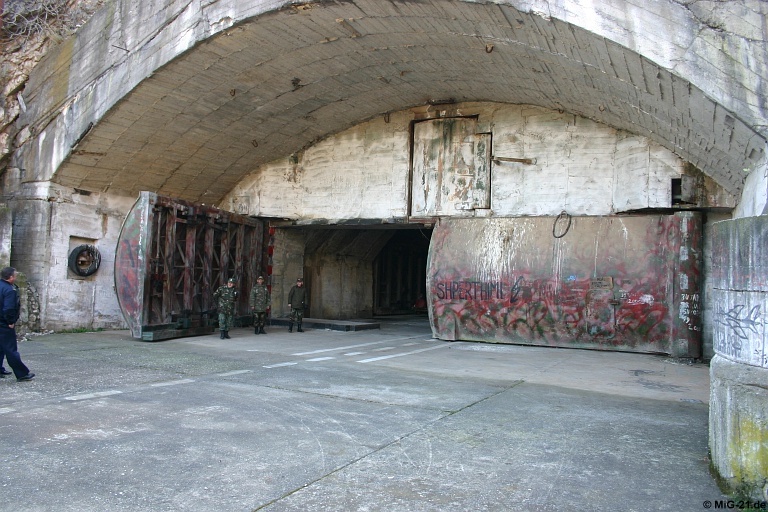
Image 8: Massive Ordnance Penetrator bomb. The MOP contains 5,300 pounds of high explosives and can penetrate 60 feet of 5,000 psi rated concrete or 25 feet of 10,000 rated concrete. (Global Security, 2012)

Military Recommendation II to Taiwanese Armed Forces
The first proposal helps ensure the survivability of Taiwanese airbases in the case of a sustained major attack. The second proposal further improves the survivability of the Taiwanese armed forces. Even with a GPS jamming system in addition to hardening airbases, the survivability of Taiwan's airbases is far from assured. In some cases, the best way to ensure an asset's continued survivability is to keep it hidden rather than protecting it in the open. Submarines are the principle example of this philosophy in warfare. In many ways, submarines are like stealth aircraft. They require meticulous attention to every detail in their design as to minimize the chance of detection, both are incredibly expensive, and both require a large number of immensely talented and experinced engineers to build. In total the Taiwanese Navy operates 4 submarines. The Trench class submarines sold from the U.S and given to the Taiwanese Navy were designed and built between 1944 and 1951. The other two submarines currently in service are the Zwaardvis class submarines bought from the Netherlands in the 1980s. David Axe argues that "The best weapons for delaying a Chinese attack are ones that can’t be targeted by ballistic missiles – and that could confront a Chinese invasion fleet far from Taiwan's shores. That means submarines." (Axe, 2011).

Image 9: One of Taiwan's only capable attack submarines, the Hai Lung class submarine. The Hai Lung are Netherlands built diesel electric attack submarines based off of the last diesel electric submarine design used by the U.S, the Barbel class submarine.
Taiwan MUST purchase high quality attack submarines. The Taiwanese Navy effectively operates two submarines compared to China's 60 submarines. Taiwan's lack of submarine's poses a much more serious security concern than the rising gap between the Taiwanese and Chinese air forces. A fleet of upgraded F-16s could harass a Chinese Navy invasion force with anti ship-missiles but a force of submarines would be more effective as they would be harder to find and destroy. Therefore, in terms of which submarines to acquire there are many options. Domestically producing high quality attack submarines is not an option. As stated previously, engineering and building a high quality submarine is a daunting task. Even nations with robust military budgets like Russia have trouble designing stealthy submarines e.g. Yasen class submarine. Thus, it is highly unlikely that Taiwan would be able to develop its own high quality class of attack submarines. Purchasing submarines from the United States is not an option for main two reasons. Politically, such a sale would be impossible given both the $5.3 billion dollar proposed upgrades for F-16s and the $6.4 billion 2009 sale. Although the United States arguably builds the best submarines in the world, the United States only operates nuclear submarines. Obviously, the sale of nuclear powered attack submarines to Taiwan would be impossible. Taiwan needs a diesel electric submarine that can operate within the strait and surrounding area (no need for global range e.g. nuclear) and they ability to remain undetected by Chinese forces. An added benefit of diesel electric submarines is they typically quieter and less expensive than their nuclear powered counterparts. (Though they lack the extended endurance and speed of nuclear submarines)
The Type 209 class submarine built by the Howaldtswerke-Deutsche Werft ship building company fulfills all the requirements listed above. HDW has a history of providing the most capable exported diesel electric submarines in the world including the Type 209 and Type 2014 submarines. The Type 209 has been sold to Argentina, Brazil, Chile, Colombia, Ecuador, Greece, India, Indonesia, Peru, South Africa, South Korea, Turkey, and Venezuela. The standard Type 209 model can be purchased at $285 million dollars which is a very reasonable price in comparison to other similar submarine models. The Dolphin class submarines (upgraded & heavily modified Type 209) used by the Israeli Navy should be of particular interest to Taiwan. Although much more expensive than the standard Type 209 submarines (roughly $700 million dollars a submarine), the Dolphin class is much more capable. (Defense Industry Daily, 2012) Using its larger 650mm torpedo tubes, the Dolphin class submarines can launch cruise missiles such as the 1,500 km range capable Popeye turbo. If Taiwan purchased the Dolphin class, not only would it be in a better position to deny easy access to Taiwan but also Taiwan would have a "second strike" capability if missiles based on mainland of Taiwan are destroyed. However, Taiwan would likely have to develop its own cruise missile which is doable. Taiwan has already developed Hsiung Feng II and Hsiung Feng III missiles. Taiwan might be able to extend the range and payload of the Hsiung Feng II while making it submarine launched capable. Israel went through a similar process when the Clinton Administration denied the sale of Tomahawk cruise missiles to Israel. Israel took the Popeye land attack missile and heavily modified it into a nuclear capable 1,500 km range cruise missile. Despite the fact that Israel has much more experience in designing missiles than Taiwan, RAND astutely noted in their report that Taiwan can learn a great deal from Israel. Both nations are in similar situations with hostile neighbors that threaten their security. As for the plausibility of Taiwan purchasing a submarines from Germany, I am not an expert in German-Chinese relations so I do not know if such a sale is possible. From the limited amount I do know on German-Chinese relations, it would be difficult to secure a sale. If Taiwan cannot get a Type 209 directly from Germany it might be able to acquire a used Type 209 from one of the nations that have already bought the Type 209 e.g. South Korea. If this option is not possible, Taiwan might be able to buy the French built Scorpene class diesel electric submarines. France has historically sold Taiwan high quality equipment but has not done so for the last decade due to increased pressure from Beijing.
Image 10: Dolphin class submarine

Image 11: Submarine launched Tomahawk cruise missile

In any event, Taiwan must make the acquisition of capable diesel electric submarines a priority. The acquisition of even 3 or 4 standard Type 209 submarines would greatly enhance Taiwan's security. Any attempt to land troops into Taiwan would become exponentially more difficult for China if Taiwan had more attack submarines. If funds from the proposed F-16 upgrades need to be diverted to purchasing submarines than so be it. Taiwan is already struggling to pay for all of its recent defense acquisitions but Taiwan's need for attack submarines is very real.
Sources:
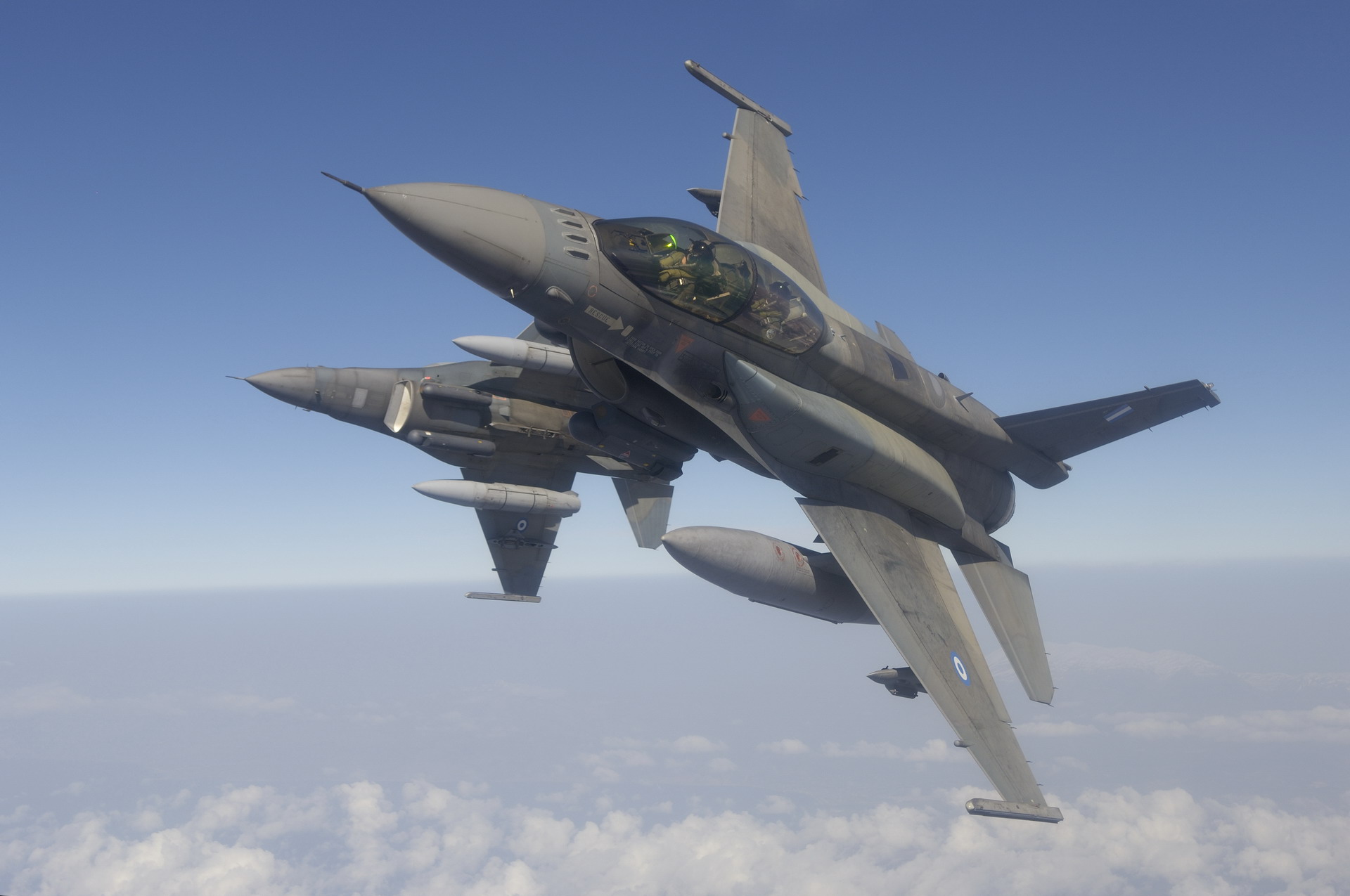
Image 11: Hellenic Air Force F-16D Block 52+

Image 12: F-16s preforming an elephant walk at Kunsan AFB in South Korea