Total Pageviews

Search This Blog

Wednesday, February 27, 2013

The Importance of Aggressor Training Part I


Image 1: 65th Aggressor Squadron F-15C with "splinter" camouflage scheme at Nellis AFB. Aggressor aircraft often use the camouflage patters found on Russian aircraft for added realism. Image Credit:  U.S. Air Force photo by Staff Sgt. William P.Coleman/Released

Too often aviation enthusiasts debate on the technical statistics of certain sensors and weapons or how a certain aspect of an aircraft's airframe makes it more maneuverable than another. In reality, a fighter aircraft is only as deadly as its pilot. In real world conflicts outside of internet forums, pilots are often the deciding factor in a dogfight. This historical trend is evident in many of the Israeli-Arab conflicts (e.g. The Six Day War) and Desert Storm. The magnitude in which both the Israeli and American forces dominated their opponents is not proportional to the disparity in aircraft performance between the opposing forces. Since the 1970s, the United States is has maintained the best set of training programs for preparing pilots for war. A key component in the U.S training exercises is the use of Aggressor pilots. This article will explain the important role aggressor training and how aggressor training will be important long into the future.

After the Vietnam War, the United States Air Force went through a through examination of its own shortcomings. An extensive series of analysis pointed to a series of factors that contributed towards the poor 2:1 exchange ratios experienced in Vietnam (Source 10). The reports concluded that most pilot casualties occurred within their first ten combat missions. If a pilot survived their first ten combat missions, their chances of surviving subsequent combat missions increased significantly (Source 1). Red Flag was designed to provide U.S pilots with their first ten "combat" missions. Blue force (trainee pilots) fly against specialized aggressor pilots (red force).


Image 2: US pilot from the 64th Aggressor Squadron flying a modified F-16. (Image Credit: image courtesy of source 3)

Aggressor pilots are chosen for their formidable skills. Aggressor pilots flying for the 64th and 65th Squadron are some of the best in the entire United States Air Force (Majumdar, 2009). Each aggressor pilot specialize in flying their aircraft in a manner similar to potential adversaries. For example, some pilots from the 65th Aggressor Squadron fly F-15C's to mimic the Su-30. Aggressor pilots will specialize in replicating the chosen single enemy aircraft and will study the aircraft in detail for an entire year. This process involves consulting various intelligence agencies (e.g. National Security Agency) about enemy tactics and the aircraft handling's characteristics. Aggressor pilots have even been known to play the Soviet National Anthem before an exercise to get in the mood (USAF, 2008).

"It is vitally important to replicate the enemy threat with more than just painting our jets with old Soviet flanker themes...We do our best to replicate every aspect of the exercise, including missiles, information operations and ground operations...We even fly the way they fly" - Captian Hale, 18th Aggressor Squadron


Image 3: 18th Aggressor Squadron decorations at Eielson Air Force Base Alaska. The motto reads: "Have at You!" or Russian (pronounced dai u tebya). Other decorations include Soviet Flags and propaganda  "Glory to the Soviet People--The Creator of Powerful Aviation".

Aggressor aircraft are easily distinguishable from their peers due to the use of old Soviet style camouflage patterns. To further heighten the realism, aggressor aircraft are modified both visually and internally to simulate the chosen enemy aircraft. (Russian, Chinese, North Korean, Iranian and Syrian are the predominate practice opponents)

"Snider’s modified and camouflaged F-15 is fitted with special radars, weapons control systems, and other characteristics of the Russian Su-30 fighter aircraft, drawn from evaluations by US intelligence agencies and firsthand reports from allies.  He works closely with the National Security Agency, the CIA, and other spy units before concluding, as he put it: 'We think this is kind of how the Su-30 would perform.'" - Bryan Bender, 2013

The effort to duplicate enemy tactics and capabilities has been greatly enhanced through acquisition of real adversary aircraft. Through undisclosed means the United States has acquired many Soviet aircraft over the years including the Su-27 and Mig 29 (Bill Sweetman, 2012). Invaluable lessons were gleamed through careful examination of adversary aircraft. For example:

"'The CIA gave us a flare dispenser from a Frogfoot [Su-25] that had been shot down in Afghanistan. We gave it to maintenance – it was just a thing with wires coming out of it. Four hours later they had it operational on a MiG-21...In 1987 we had the AIM-9P, which was designed to reject flares, and when we used US flares against it would ignore them and go straight for the target. We had the Soviet flares – they were dirty, and none of them looked the same – and the AIM-9P said 'I love that flare'"

The effect Red Flag has had on the USAF is undeniable. The improved dogfighting skills of USAF pilots played an important role in Desert Storm. The F-15C scored 32 aerial victories in Desert Storm with no losses (Source 7). Although only eight kills were achieved at visual range, the lack of any casualties is a testament to the quality of training provided at Nellis. After the Gulf War, a pilot said "it was almost as intense as Red Flag".

Part II will discuss the current state of Red Flag and the important role it will serve into the future.

PART II LINK HERE

Sources 

  1. http://bostonglobe.com/news/nation/2013/02/23/air-force-retrains-pilots-confront-high-tech-enemy/8ZSwUe4IPREnLgDcxQqjRJ/story.html
  2. http://www.aviationweek.com/Blogs.aspx?plckPostId=Blog:27ec4a53-dcc8-42d0-bd3a-01329aef79a7Post:1253fb8a-3b45-4f68-b273-fff9b8f2f73d
  3. http://www.pixel-moments.de/8.html
  4. http://www.examiner.com/article/the-aggressors-someone-has-to-play-the-bad-guy-part-one
  5. http://www.examiner.com/article/the-aggressors-someone-has-to-play-the-bad-guy-part-two
  6. http://www.airforcetimes.com/news/2009/12/airforce_aggressors_121309/
  7. http://www.defensemedianetwork.com/stories/f-15-eagles-were-the-deadliest-birds-of-desert-storm/
  8. http://www.eielson.af.mil/news/story.asp?id=123102438
  9. http://www.popularmechanics.com/technology/military/4311433
  10. http://www.airforce-magazine.com/MagazineArchive/Pages/2000/November%202000/1100flag.aspx


Image 4: Aggressor F-16 at Nellis. (Image Credit: Source 3) 

Saturday, February 23, 2013

The Future of the USAF Part I


Image 1: F-35A finger four formation. The USAF current plans to acquire 1,763 F-35A aircraft.

This series of articles will outline the planned future composition of the USAF for the next forty years. The average age of an aircraft serving in the USAF is 26 years (Defense Industry Daily, 2013). Future and planned procurement programs will seek to replace many of the venerable but aging aircraft. Subsequent parts in this article will examine in depth particular aircraft and their future/planned usage in the USAF.

Note:  ~ indicates an approximate date which might be subject to change.

USAF Procurement & Upgrade Programs 


2013 - Upgrade for F-15E fleet with new AESA radars and HMD begins. $6.9 billion awarded to Lockheed Martin for F-22A fleet upgrades 3.2a & 3.2b.
2014 - Structural testing begins with goal of extending F-15C service life to 18,000 hours, F-15E to 32,000 hours. Tests set to be completed by 2015. ~ 2014 RQ-4 Block 40 full rate production begins
2015 - F-15C IRST program restarts.
2016 - Increment 3.2a upgrade completed  for Raptor fleet. AESA radars upgrade for 150 F-15C aircraft
~2016-2017 - F-35 IOC  (initial operational capacity). First KC-46A tankers delivered to Air Force.     2018 - 300 to 350 F-16C retained for upgrades, upgrade process begins (+15 year life added to airframes) F-22A fleet begins to reach mid life expectancy (4,000 fight hours)
2020 - Increment 3.2b upgrade completed for Raptor fleet
2019 - IBS/SB-16 upgrade completed for B-1B fleet
~2020+ LSR-B (formerly known as Next Generation Bomber) to enter service
2022 - F-16C upgrade process concluded
~2025 - A-10 set to retire
~2030 - 6th generation fighter reaches IOC
~2031 Raptor fleet approaches 8,000 service hour limit (almost certainly will have structural enhancement program to extend service life past 8,000 hours)
2035 - F-15C set to retire
~2037 - F-16 retirement (15 year life extension from 2022)
~2040 - B-52 Retires
2058 B-2 set to retire

Planned USAF fighter fleet composition 2030:


- 184 F-22A Raptors
- 700 to 1050 F-35A (pessimistic and planned estimate)
- 300 to 350 F-16C
- 220 F-15E
-175 to 249 F-15C/D
- 6th generation fighter (?)

Sources 


  1. http://www.defenseindustrydaily.com/aging-array-of-american-aircraft-attracting-attention-0901/
  2. http://www.airforcetimes.com/news/2012/10/air-force-f-15-upgrades-aim-double-service-life-102912w/
  3. http://thediplomat.com/2012/05/06/why-the-u-s-wants-a-new-bomber/?all=true 
  4. http://www.flightglobal.com/news/articles/usaf-plans-f-15-modernization-but-pilots-want-better-displays-375612/ 
  5. http://defense-update.com/20130114_f-35b-joint-strike-fighters-and-more-v-22-ospreys-destined-for-japanese-bases.html
  6. http://defensetech.org/2012/09/26/air-force-seeks-afterlife-for-f-15s/
  7. http://www.flightglobal.com/news/articles/boeing-integrates-joint-helmet-mounted-cueing-system-into-f-15se-374904/
  8. http://www.defensenews.com/article/20110524/DEFSECT01/105240303/U-S-Military-May-Deploy-F-35-Before-Formal-IOC
  9. http://www.defenseindustrydaily.com/f22-raptor-procurement-events-updated-02908/
  10. http://www.aviationweek.com/Blogs.aspx?plckBlogId=Blog:27ec4a53-dcc8-42d0-bd3a-01329aef79a7&plckPostId=Blog%3A27ec4a53-dcc8-42d0-bd3a-01329aef79a7Post%3A40a881f7-7eea-4429-83e3-7bf315c5a9db
  11. http://www.dod.mil/pubs/foi/logistics_material_readiness/acq_bud_fin/SARs/DEC%202011%20SAR/F-35%20-%20SAR%20-%2031%20DEC%202011.pdf 
  12. http://www.airforcetimes.com/news/2012/03/ap-b-2-stealth-bombers-2-billion-upgrade-whiteman-air-force-base-032712/
  13. http://www.defenseindustrydaily.com/f-15s-looking-for-the-aesa-edge-04044/
  14. http://www.defenseindustrydaily.com/aging-aircraft-usaf-f-15-fleet-grounded-04149/
  15. http://www.af.mil/news/story.asp?id=123304510
  16. http://www.dod.gov/pubs/foi/logistics_material_readiness/acq_bud_fin/SARs/DEC%202011%20SAR/RQ-4A%20B%20UAS%20GLOBAL%20HAWK%20-%20SAR%20-%2031%20DEC%202011.pdf
  17. http://www.defenseindustrydaily.com/f-18-super-hornets-to-get-irst-03429/

Thursday, February 21, 2013

Raptor & Typhoon Exercise Updates


Image 1: UK Typhoons train with USAF Raptors in preparation for Red Flag (Image Credit: USAF)

The performance concerns stemming from the Raptor's lack of a HMD has become increasingly apparent. These exercises give an interesting look at how 4.5 generation aircraft will stack up against their 5th generation counterparts. If the trend of off-boresight missiles and HMD's continues to play a role in exercises, this will certainly help the F-35 in VR combat. Once again, normal posts will resume next week.

“Raptor’s thrust vectoring not essential” Eurofighter pilot says in last chapter of the F-22 vs Typhoon saga By David Cenciotti
Top U.S. Stealth Jet Has to Talk to Allied Planes Over Unsecured Radio By David Axe
U.K, U.S. Prep for Red Flag By BRIAN EVERSTINE

Saturday, February 16, 2013

Reading List

Due to my busy work schedule, I will likely not post anything for the next week. Here is a list of suggested videos and articles took keep you occupied in the meantime. Let me know what you guys think.

Videos 

Commemorative 67th Fighter Squadron: Raytheon Award


Danish Air Force F-16 DEMO-FLIGHT HD


Russian Air Force 100th Anniversary Video: 20 aircraft Formation


Meteor Missile Test (2:30)


Lecture Innovations Towards Invisibility The CIA OXCART Project and A-12 Reconnaissance Aircraft


Special Thanks to David Axe, David Cenciotti, and Dave Majumdar for the video references

Suggested Articles:  


USAF Related:
U.K, U.S. Prep for Red Flag By BRIAN EVERSTINE (Raptor and Eurofighter)
AIM-9X Block II performing better than expected By: DAVE MAJUMDAR
F-22 Raptors need helmet-mounted cueing system to take full advantage of AIM-9X By By: DAVE MAJUMDAR
Raytheon and General Atomics team-up to integrate MALD onto Reaper By DAVE MAJUMDAR
Guam Tip of the spear: By Dr Carlo Kopp
Adaptive Engines: By Rebecca Grant 
Simulation plays vital role in building F-35 tactics and aircraft development By DAVE MAJUMDAR
US Acquisition of Soviet Aircraft: "We didn’t know what 90 percent of the switches did" By Bill Sweetman

Russia & China
IN FOCUS: Russian's next-generation bomber takes shape By VLADIMIR KARNOZOV
China Upgrades Iranian Jets By David Axe
Bear Bombers Over Guam By Bill Gertz
How Russia fears being forgotten By Lucian Kim
Obama’s rudderless China, Russia policy By Michael Mazza

Europe:
German Air Force receives MANTIS air defense system
Sweden’s Military Spending To Rise? By GERARD O’DWYER
Use Patriot missiles to defend Sweden: minister The Local
BAE releases footage of Typhoon Meteor firing By By: CRAIG HOYLE


Thursday, February 14, 2013

Latest in the F-35's Maneuverability Saga


Image 1: Lockheed Martin F-35 (Image Credit: Lockheed Martin)

Author's Note: To all my fellow forever alone aviation enthusiasts, I'd like to wish you a happy Singles Awareness Day (S.A.D)! Despite my busy work schedule I decided it was necessary to post today. Hope it helps, enjoy.

The F-35 program has been subject to constant scrutiny by its detractors. A popular issue F-35 critics love to hate is the ongoing performance issues related to the F-35's maneuverability. Lockheed Martin test pilot Billy Flynn recently struck back against critics with his own assessment of the jet's maneuverability related capabilities. In Flynn's view, the F-35 demonstrates comparable to superior levels of maneuverability performance when compared to advanced 4th generation fighter designs like the Eurofighter and Super Hornet. Flynn is an extremely experienced test pilot who has flown nearly every prominent western fighter aircraft, including the Eurofighter Typhoon and F-22 Raptor. After Flynn expressed his views, other fighter  pilots expressed their skepticism of the F-35's performance. The following image is taken from Defense Industry Daily (who has 100% ownership of the image). The illustration maps the exchange between Flynn and other pilots.


Image 2: All credit and ownership to Defense Industry Daily

  The disparity between Flynn's claims and the views of other fighter pilots makes it difficult to ascertain the F-35's aggregate level of maneuverability performance. Given the assessment of the most ardent F-35 critics, one could believe the F-35 is less maneuverable than a fully loaded C-5M Super Galaxy (sarcasm). As I've explained before, maneuverability is not determined by a single aerodynamic characteristic or statistic. Rather, determining an aircraft's maneuverability involves comparing its: wing loading, sustained turn ability, g limit tolerance, thrust to weight ratio, rate of climb, angle of attack limitations, acceleration performance, etc. to other aircraft.  It is always preferable to test these metrics in real world situations rather than to debate with only paper statistics in a purely academic manner.

To summarize the findings of my Canada and the F-35 article, the F-35 has some decent to good maneuverability characteristics. For example, due to the use of internal weapon bays, the F-35's performance characteristics are not significantly altered when it caries a full load of air to air missiles. Traditional fighter aircraft will experience a hit in performance once weapons are equipped due to the increase in drag (bear in mind the F-35's air to air load is less than a fully laden F/A-18E or Eurofighter Typhoon). It is important not to overstate the degree in which the F-35 is maneuverable. It was designed from its inception to feature less maneuverability than the more expensive F-22 due to both the emphasis on price and ground attack performance. In terms of aggregate maneuverability performance, the F-35 is generally less maneuverable than the most competent 4.5 generation aircraft e.g. Eurofighter Typhoon. The F-35's lower maneuverability does not make the F-35 incompetent in air to air combat situations when other factors such as off-boresight IR missiles, HMD, DAS, etc. are all accounted for. Flight Global's Dave Majumdar does a good job describing how F-35 pilots will compensate for the aircraft's weakness during engagements against more maneuverable opponents.

"Pilots will have to make extensive use of the F-35's stealth characteristics and sensors to compensate for performance areas where the jet has weaknesses, sources familiar with the aircraft say. But engagement zones and maneuvering ranges will most likely be driven even further out against the most dangerous surface-to-air threats. In an air-to-air engagement, for example, tactics would have to be developed to emphasize stealth and beyond visual range (BVR) combat. If a visual range engagement is unavoidable, every effort would have to be taken to enter the 'merge' from a position of advantage, which should be possible, given the F-35's stealth characteristics. Once engaged within visual range, given the F-35's limitations and relative strengths, turning should be minimized in favor of using the jet's Northrop Grumman AAQ-37 distributed aperture system of infrared cameras, helmet-mounted display and high off-boresight missiles to engage the enemy aircraft. If a turning fight is unavoidable, the F-35 has good instantaneous turn performance and good high angle of attack (50°AOA limit) performance comparable to a Boeing F/A-18 Hornet, which means a similar strategy could be adopted if one finds him or herself in such a situation."  

The only way Lockheed Martin and F-35 critics will definitively know the extent of the F-35's dog fighting abilities is to stage a series simulated exercises. Such an exercises should include a mix of 4th, 4.5, and 5th generation opponents. I doubt even basic fighter maneuvering engagement type tests would be possible before Block 2A software is incorporated into the F-35 fleet. Furthermore, it is unlikely that the results of an initial dogfight would be released to the public. Eventually, I would expect the F-35 to participate in Red Flag training exercises when it enters service. My prediction is the F-35 pilots will initially get their collective rear ends handed to them by veteran U.S aggressor pilots. Eventually, the F-35 pilots will learn to capitalize on all the strengths of their aircraft and out preform most of their rivals (except the F-22). Competent F-35 pilots will likely be able to engage and consistently defeat 4.5 generation opponents but they will experience higher casualty rates than Raptor pilots.

Related American Innovation Blog Content (links provided):

Canada and the F-35
Red Flag 2012: Did the Raptor Seriously Get Owned?
The Future of 4th Generation Aircraft in the 21st Century
F-35 Maneuverability Woes
Murphy's Law at Work: F-35 Development and Performance Concerns

Sources

  1. http://www.defenseindustrydaily.com/The-F-35s-Air-to-Air-Capability-Controversy-05089/
  2. http://www.flightglobal.com/news/articles/in-focus-lockheed-claims-f-35-kinematics-better-than-or-equal-to-typhoon-or-super-hornet-382078/
  3. http://www.flightglobal.com/news/articles/operational-testers-to-receive-first-f-35s-this-month-382189/
  4. http://www.flightglobal.com/news/articles/reduced-f-35-performance-specifications-may-have-significant-operational-impact-381683/
  5. http://www.flightglobal.com/blogs/the-dewline/2013/02/typhoon-test-pilot-responds-to.html
  6. http://theaviationist.com/2013/02/11/typhoon-aerial-combat/#.URxaEqV9KSo
  7. http://www.defenseindustrydaily.com/f22-raptor-procurement-events-updated-02908/

Friday, February 1, 2013

Updates 2/1/13


Image 1: RAH-66 Comanche

I know nobody likes these updates but its the only way I have to "speak" to you guys. To help me improve as an author, could you guys tell me what you thought about the Canada and the F-35 article? Was it too long? I do quite a bit of research in preparation for an article but sometimes it can be a bit much. Viewer feedback is really the only way I can tell if people read these (or the 3 options at the bottom: excellent, cool, or needs work), Thanks.

Upcoming articles: The State of the NATO Alliance, The Importance of C4ISR, What Would an American Strike on Iran Accomplish?, America's Next Generation Bomber Part II, The importance of Aggressor Squadrons, The Future of the USAF, Something related to attack helicopters (?)

If you guys have any article suggestions feel free to ask. :)

Article Improvements & Updates (links provided)

Canada and the F-35: Added HMD, supplementary avionics information, and more maneuverability content
Canada and the F-35 PART III: interim purchases discussed, added recommendations, and additional sources added
F-35 Maneuverability Woes: Updated PAK FA avionics info (thanks for reminding me in the comments)

News: IRAN

Iran's "stealth fighter" is a piece of junk (just a mock-up). More Info: http://theaviationist.com/2013/02/02/iran-new-stealth-fighter/#.UQ8DlqV9KSo


Thursday, January 31, 2013

The Big, The Fat And The Ugly: Logistic Assets That Make America A Superpower

This week we will examine the often forgotten logistical assets that enable combat units to preform effectively. 

Image 1: F-22A Raptor formation. 

The core characteristic that elevates a great power to superpower status is its ability to project hard power (military force) across the entire planet. The term superpower is often synonymous with vast fleets of ships, lethal stealth aircraft, or armies of well trained combat units. Few associate the term with mundane old tanker aircraft, cargo ships, etc. The reality is very different. The United States maintains its superpower status through an extensive network of logistic assets. Without these assets, the ability for the United States to project power abroad would be greatly diminished. Although the quality, training, and level of technological sophistication contribute to America's overall military strength, none of the aforementioned qualities necessarily makes America a superpower. The real strength of America's military lies in its ability to deploy more manpower, more materiel, and more firepower to any combat zone when compared to any potential aggressor. Some of the key logistic assets that enable U.S. forces to project power abroad will be examined: fleet replenishment oilers, aerial refueling aircraft, and strategic airlift assets.   

Fleet Replenishment Oilers 


Image 2: Henery J. Kaiser oiler refueling a Ticonderoga class cruiser. (Image Credit: USN) 

The carrier strike group is a key component of America's ability to project power abroad. With the exception of the Nimitz class supercarrier, the US Navy's surface ships utilize conventional diesel electric engines. Despite the considerable amount of fuel many U.S ships carry on board, the scale and duration of global deployments will inevitably result in fuel shortages for non-nuclear powered vessels. The Henry J. Kaiser class fleet replenishment oilers greatly supplement the range of non-nuclear powered naval assets like destroyers, cruisers, transports, etc. The U.S Navy operates a total of 15 Kaiser class oilers (Source 1). The Kaiser class can deliver 900,000 gallons of diesel to two vessels simultaneously within an hour or 540,000 gallons of jet fuel. The Kaiser class vessels also can store additional food for the fleet if needed. 

A telltale sign of a mature well funded navy is its ratio of oilers (and support ships) to standard combat vessels. The current Chinese Navy owns only handful of oilers to refuel its rapidly growing navy. The new Type 903 class replenishment ships will be more of a game changer for the PLAAN than the Liaoning carrier over the next decade. 

"Prior to the introduction of the new Type 903s, the PLA Navy possessed just a handful of smaller oilers, including refurbished Soviet vessels and two of an earlier version of the Qiandaohu class: just five tankers in total to support a combat fleet numbering no fewer than 75 major warships, including frigates, destroyers, amphibious assault ships and the lone carrier. The U.S., by contrast, possesses more than 30 underway replenishment ships — all of them larger than China’s oilers — to support around 130 large surface warships." - David Axe, 2013

The PLANN is not true blue water navy in many aspects. The current doctrine of the PLAAN revolves around an anti-access strategy with regional power projection rather than global deployment. For example, it would be tremendously difficult for the PLANN to sustain a large force of ships near Hawaii for an extended period of time. The limited scope of PLANN operations is partially due to its deficiency of replenishment and sufficient support vessels. 

By the latter half of the current decade, China will likely be able to project and sustain a modest-sized force, perhaps several battalions of ground forces or a naval flotilla of up to a dozen ships, in low-intensity operations far from China. This evolution will lay the foundation for a force able to accomplish a broader set of regional and global objectives. However, it is unlikely that China will be able to project and sustain large forces in high-intensity combat operations far from China prior to 2020." - Department of Defense 2011

This is not to say the PLAAN is no threat to the United States Navy. The PLAAN is becoming increasingly adept at operating vessels up to the second island chain in the western pacific (Japan, Guam, etc.) However, China is not a superpower due to its inability to project power far beyond its shores. 

Tanker Aircraft 


Image 3: USAF KC-10 tankers

The most recent military campaigns waged by Western forces, Unified Protector (Libya) and Operation Serval (Mali), have both demonstrated the key role of aerial refueling aircraft. Collectively, the NATO participants of Unified Protector were heavily dependent on the U.S tanker fleet. David Cenciotti of the Aviationist noted: "without American tankers, there would not be any NATO air campaign." The Italian, French, UK, Swedish and Canadian Air Forces provided limited tanker support but it was not nearly enough to sustain the rest of the collation aircraft. In ongoing operations over Mali, the French have had to make use of American KC-135 tanker support in order to sustain combat operations. Three U.S. KC-135 tankers based in the UK have provided assistance to the French. (Cenciotti, 2013)

Aerial refueling aircraft greatly expand the range and flexibility of direct combat aircraft. Armed strike aircraft can stay on station above an area and wait for hours with the assistance of tankers as opposed to loitering for only ten minutes before having to returning to base. The total number of aircraft that can be deployed to a distant combat zone is also determined by the number of available tanker aircraft. For example, in the what would an Israeli strike against Iran accomplish article, the effect of the Israeli Air Force's limited tanker fleet is discussed. The IAF would only be able to operate a few dozen aircraft over Iran at a time. The deficiency in tanker aircraft could jeopardize the IAF's ability to destroy Iranian nuclear sites. 

Despite the rapid advancements made by the Chinese Air Force (PLAAF), it still lags behind the United States by 20-30 years in some respects. The PLAAF operates a total of 10 outdated tanker aircraft (modified bombers for refueling missions) with a planned eight tankers on order from Russia (Source 3). In comparison  the United States Air Force operates a total of  508 tankers (USAF, 2012). Once again, the ratio between combat aircraft and tankers is important. 

PLAAF: 1,452 combat aircraft, 18 tankers, 80.6 ratio 
USAF: 2,218 combat aircraft, 508 tankers, 4.36 ratio 

The PLAAF ability to project power is greatly limited with only 18 tanker aircraft. The addition of external fuel tanks will augment the PLAAF's range but at the cost of reduced weapon capacity. 

Strategic Airlift Capability


Image 4: C-17 Globemaster III formation.

Few leaders realize a direct combat platform cannot strike a target if it does not have the required fuel necessary to reach its target. In some cases, the range of direct combat assets cannot be feasibly augmented enough for it to reach an area on its own. In many cases, assets must transported via strategic airlift. Many heavy assets such as main battle tanks must be airlifted to countries thousands of miles away. Without transport, an entire fleet of multi-million dollar tanks is rendered effectively useless unless it can reach the combat zone. Heavy military cargo aircraft like the C-17 Globemaster III and C-5 Galaxy allow the United States to move combat units around the world as needed. The importance of strategic airlift capabilities has been recently demonstrated in Operation Serval. The French were largely unable to deploy their own ground forces to Mali without allied support.

Currently, the United States maintains a dominant lead in strategic airlift capabilities. The Russian Air Force maintains a distant second place while China largely lacks robust strategic airlift capabilities. The graph below examines total airlift capacity in pounds for the USAF, Russian Air Force, and PLAAF by 2020. Specific figures used can be found in the notes section.


China recently unveiled its domestically produced Y-20 transport. By 2020, it is likely that the Y-20 will compliment the PLAAF's IL-76 transports from Russia. The current Y-20 features Russian engines and can likely carry up to 60 tonnes (The Diplomat, 2013). It is unclear how many Y-20 transports China intends to produce or if a heavier transport design will supplement the Y-20. If the Y-20 is produced in significant numbers, it will greatly aid China's power projection abilities provided the transports have a safe landing zone. The United States ability to project power is greatly augmented by its large number of oversea bases capable of receiving cargo aircraft. China lacks a comparable network of oversea bases.


Image 5: Y-20 transport

All too often shiny high tech fighter aircraft are the sole object of a government's attention when it comes to procuring military equipment.  The old and mundane logistic assets enable a force to operate at its full strength. The United States can effectively project power across the globe in part due to its extensive network of logistic assets. China is a long ways away from being able to project power on the level of the United States. A true testament to the logistic capability of the U.S military is the following figure from Flight International: the United States military operates 18% of the world’s combat aircraft but operates a disproportionately large 35% of the world’s tanker and cargo aircraft. No other entity has masted logistics to the degree of the United States Military.


Sources 


  1. http://www.airforce-magazine.com/MagazineArchive/Magazine%20Documents/2012/May%202012/0512facts_figs.pdf
  2. http://theaviationist.com/2011/10/26/libya-final-report/#.UQmlvyd9KSo
  3. http://www.asianmilitaryreview.com/directories/
  4. http://www.airforcetimes.com/news/2009/04/airforce_c5m_dover_042909
  5. http://www.flightglobal.com/news/articles/lockheed-martin-inducts-first-c-5b-for-c-5m-modifications-331286/
  6. http://www.theaviationzone.com/factsheets/c5_specs.asp
  7. http://www.af.mil/information/factsheets/factsheet.asp?fsID=86
  8. http://www.globalsecurity.org/military/systems/aircraft/c-5.htm
  9. http://www.af.mil/information/factsheets/factsheet.asp?id=84
  10. http://www.flightglobal.com/blogs/the-dewline/2011/09/lockheed-pitches-retired-c-5as.html
  11. http://www.lockheedmartin.com/us/products/c5/c-5-specifications.html
  12. http://www.ilyushin.org/eng/products/cargo/76td90.html
  13. http://www.airliners.net/aircraft-data/stats.main?id=251
  14. http://www.flightglobal.com/news/articles/russia-signs-deal-for-new-generation-il-76-transports-377334/
  15. http://www.asianmilitaryreview.com/directories/
  16. http://www.aviationweek.com/Blogs.aspx?plckPostId=Blog:27ec4a53-dcc8-42d0-bd3a-01329aef79a7Post:e572e070-a3a5-4b0c-9d2a-2335ec18550f
  17. http://www.airliners.net/aircraft-data/stats.main?id=36
  18. http://www.lockheedmartin.com/us/products/c5/capabilities.html
  19. http://function.mil.ru/news_page/country/more.htm?id=11392123@egNews
  20. http://www.af.mil/information/factsheets/factsheet.asp?id=109 

Notes


Determining the exact airlift capacity for the following air forces was a daunting task. Each type of aircraft had many variants of the same aircraft each with their own payload specifications. Hence, the figures might not be exact but they should be within reasonable parameters. Medium transport planes were not included (e.g. C-130).

Total USAF Strategic Airlift Capacity 2020: 65,192,700 lb
C-5M: 52 * 285,000 = 14,820,000 
C-5B: 32 * 270,000 lb = 8,640,000 lb
C-5A: 35 * 220,000 lb = 7,040,000
C-17 III: 203 * 170,900 = 34,692,700

Russia 2020 Strategic Airlift Capacity: 30,511,065 lb
IL-76-90MD: 110231.13 * 39 = 4,299,015
IL-76: 88185 * 210 = 18,518,850
AN-22: 99,200* 21 = 2,083,200
AN-124 = 330000 * 17 = 5,610,000

 China 2020 Strategic Airlift Capacity: 12,774,806.5 lb
50 IL-76MD: 5,511,556.5
Y-20: ~50 * 132,277 = 6,613,850

The PLAAF figure will be largely dependent upon how many Y-20 transports China plans to acquire. The plane uses Russian engines as domestic engine production remains challenging. There are no exact figures for the maximum payload of the Y-20 but 60 tonnes seems reasonable given the weight of Chinese MBT's.


Image 6: Two 69 ton Abrams tanks on board a C-5M Super Galaxy 

Wednesday, January 23, 2013

Canada and the F-35 Part III: Procurement Proposal


The most credible argument against the acquisition of the CF-35 has nothing to do with the performance limitations or the direct cost of the F-35 itself.  Canada's Air Force remains woefully ill-equipped in terms of C4ISR abilities (Command, Control, Communications, Computers, Intelligence, Surveillance and Reconnaissance) 

Currently Canada's defense spending accounts for 1.4% of its GDP. (Source 77) This figure is considerably less than the mutually agreed upon 2% GDP standard set by NATO. (Source 78) The result's of Canada's hesitation to fulfill its defense obligations has taken a serious toll on its capabilities. The Canadian Air Force maintains no electronic warfare capabilities, no significant intelligence gathering capabilities (only 3 UAV's on lease from Israel), and no command and control aircraft (e.g. AWACS). The results from Operation Unified Protector were clear, Canada and non-American NATO countries are too dependent upon American forces for C4ISR and logistical support. (Source 79) 

It would be naive to believe Canada's defense budget will increase above planned levels in the near future. The Canadian Air Force will have to make due with the funds allocated to it inspite of the Government's failure to meet the 2% GDP target. Canada must coordinate its procurement of equipment with other allies to ensure the future NATO force remains balanced and critical logistical and  C4ISR criteria are fulfilled. The following proposal of equipment will allow Canada to keep planned military spending levels while greatly increasing the overall electronic warfare and C4ISR abilities among non-American NATO allies.  

The following price figures are taken from the United States Defense Department Budget Proposal YF 2013 (Source 74) and Sources (80-82). With the C$10 billion dollars allocated to the procurement of the CF-35, the author recommends the Canadian Government acquires the following.

2014 Proposal 
  1. CF-35 Lightning II; Quantity: 35  - $5.95 billion USD (Unit Cost 187.5-165 million; $170 million dollar estimate used) 
  2. MQ-9 Reaper UAV's; Quantity: 6 - $393 million USD (Contract would include 5 year support and maintenance contract in addition to ground control stations) 
  3. F/A-18E Super Hornet Block I; Quantity 30 - $2.3829 billion USD (Unit cost $79.43 million, contract should include option to upgrade fleet to Block II status) 
  4. EA-18G Growler; Quantity: 12 - $1.02732 billion USD (Unit cost $85.61 million) 
  5. Spare engines, electronic components and assorted additional systems ~$120 million USD

Projected Total Cost: $9,873,220,000 USD ($9.873 billion); $126.78 million remaining  
NOTE: Purchase is subject to USD - Canadian Dollar exchange rate; cost may comparatively be less to Canada if the appreciation of the Canadian dollar continues. 

The Super Hornet was selected to bolster the CF-35 force out of necessity.  Under ideal budgetary circumstances, Canada should be able to purchase all 65 CF-35 aircraft. Because of the EA-18G and MQ-9 Reaper purchases, the remaining funds would have yielded an insufficient number of CF-35 aircraft to protect Canadian airspace. The F-15SE was a very attractive option but the lower cost of the Super Hornet was the deciding factor. Although the CF-35 is more capable than the F/A-18E in many aspects, the Super Hornet still provides a robust performance against potential adversaries (especially if Block II upgrade is purchased). The author recommends that the Super Hornet should be ordered as an interim gap-filler to hedge against JSF program delays.

There are very real and ongoing development issues for the F-35 Program. However, the author is confident the vast majority of concerns will be fixed or mitigated given time. The author recommends the Canadian government delays its procurement of the CF-35 by a year to two years (authorize purchase in 2015-2016 vs. planned 2014). This would reduce both the cost and number of  in service design modifications the CF-35 fleet would have to undergo. This would be accomplished by the interim purchase of 30 F/A-18E Super Hornets. Modifications to extend the service life of a few dozen the current CF-18 should be considered. Another possible option is to lease a few F-16's from the U.S Government while the transition to the CF-35 is completed.


The CF-35 offers the greatest degree of survivability  most capable avionics, and highest lethality of any export aircraft available to Canada. With the addition of CUDA, Block 4, improved transonic drag performance  and emergency shut off valves, the CF-35 is more than qualified to meet Canada's overall defense needs. This proposals offers a balanced approach to meeting Canada's defense needs. The combination of abilities gained from the inclusion of the JSF, Super Hornet, Reaper, and Growler gives the CAF more strength than the mass purchase of any single aircraft.


Should the funds be available after the initial purchase (can also be included in original package), the author recommends the procurement of the following weapon systems to increase the effectiveness of the purchased aircraft. 

Proposal II: Total Cost $750 million USD 

- 600 SDB: $17.5 million - $24 million
- 100 AGM-88E AARGM – 101.94 million
- 300 AIM-120D – $459 million
- 126 AIM-9X – $67.5 million
- CUDA (?) $97.96 million


These purchases will not address every need of the Canadian Air Force. However, this proposed package will greatly increase the electronic warfare, air supremacy, and ISR capabilities of the Canadian Air Force. With this combination of aircraft, the CAF will be able to enter an enemy's IADS and neutralize key SAM sites and radar arrays. This capability is paramount to securing NATO's ability to defeat IADS systems. Groups of CF-35's working in tandem with missile laden F/A-18E's is a force to be reckoned with. These assets will also provide an excellent defense of Canada's airspace.


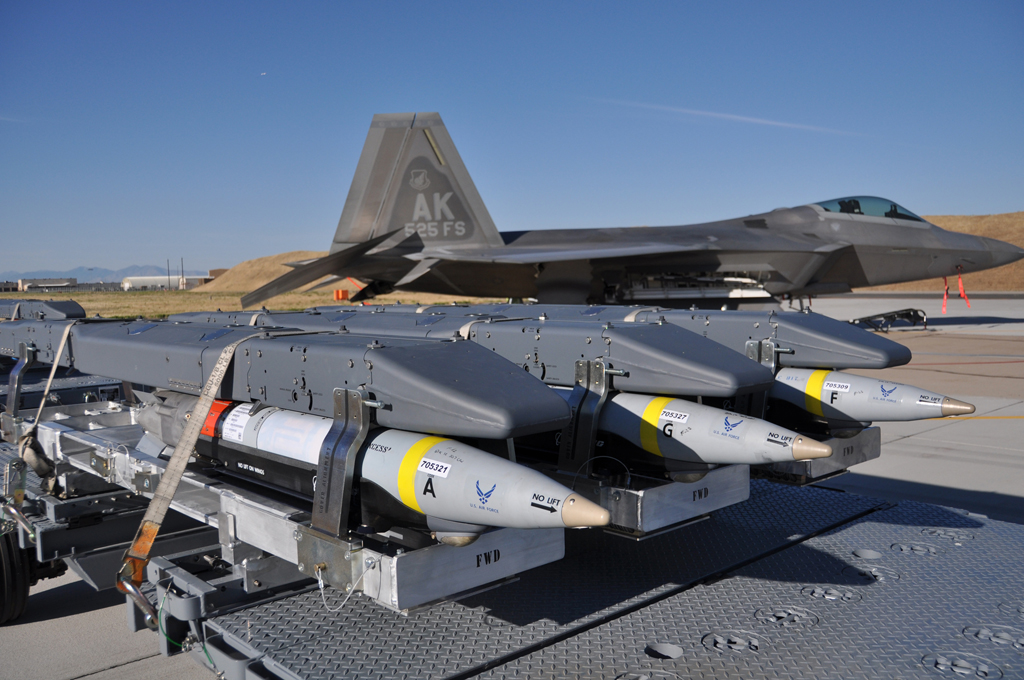
Image 2: The small diameter bomb (SDB) is an affordable 250 lb (113.6 kg) precision guided munition. The SDB is a general purpose weapon that can be utilized in a variety of situations. The SDB features a small explosive payload and a high degree of accuracy to reduce collateral damage.  (Image Credit: USAF)


Image 3: The EA-18G Growler is a modified version of the Boeing F/A-18F Super Hornet. The two aircraft share 90% of their components. Australia recently chose to convert half of its Super Hornet fleet into EA-18G's. The Growler will grant the CAF electronic warfare and enhanced SEAD capabilities. The Growler will also increase the survivability of deployed 4.5 generation assets against SAM systems. (Image from Defense Industry Daily, 2013)

Source Material 

  1. http://www.airforce-magazine.com/MagazineArchive/Magazine%20Documents/2012/November%202012/1112expo.pdf
  2. http://www.bahdayton.com/surviac/asnews/ASJ_Spring2012_V9_web.pdf
  3. http://nation.time.com/2013/01/11/hot-stuff-the-f-35-just-became-25-more-vulnerable/
  4. http://tecnologamilitar.blogspot.com/2011/05/noruega-naval-strike-missile.html
  5. http://www.lockheedmartin.com/us/products/f35/f-35a-ctol-variant.html
  6. http://www.ausairpower.net/APA-NOTAM-191010-1.html
  7. http://www.ausairpower.net/APA-2009-01.html
  8. http://insidedefense.com/201203012392003/Inside-Defense-General/Public-Articles/pentagon-waters-down-difficult-to-achieve-jsf-performance-requirements/menu-id-926.html
  9. http://www.defenseindustrydaily.com/canada-preparing-to-replace-its-cf-18-hornets-05739/
  10. http://www.afa.org/professionaldevelopment/issuebriefs/F-22_v_F-35_Comparison.pdf
  11. http://theaviationist.com/2012/11/30/cuda/#.UPOvhCd9KSo
  12. http://theaviationist.com/2012/11/20/f-35-aoa/#.UPOvjyd9KSo
  13. http://www.ausairpower.net/aesa-intro.html
  14. http://books.google.com/books?id=hBxBdKr0beYC&pg=PA140&lpg=PA140&dq=sustained+radius+turn&source=bl&ots=9rcr-FeIOc&sig=2XH8gqgW6PzoVUburhJa4IhjS80&hl=en&sa=X&ei=6oT0UOSAJqfuiQLwhYH4Bg&ved=0CFcQ6AEwBQ#v=onepage&q=sustained%20radius%20turn&f=false
  15. http://www.defenseindustrydaily.com/The-F-35s-Air-to-Air-Capability-Controversy-05089/
  16. http://manglermuldoon.blogspot.com/2012/05/f-35-development-and-performance.html
  17. http://manglermuldoon.blogspot.com/2012/06/threat-analysis-of-foreign-stealth.html
  18. http://www.ausairpower.net/APA-Zhuk-AE-Analysis.html#mozTocId563567
  19. http://www.youtube.com/watch?feature=player_embedded&v=b2siH9W5P4E
  20. http://i619.photobucket.com/albums/tt271/SpudmanWP/F-35BlockUpgrades.jpg
  21.  http://www.rand.org/content/dam/rand/pubs/monographs/2010/RAND_MG797.pdf
  22. http://www.rand.org/content/dam/rand/pubs/monographs/2011/RAND_MG915.pdf
  23. http://www.raytheon.com/newsroom/rtnwcm/groups/rms/documents/content/rtn_rms_ps_aim9x_datasheet.pdf
  24. http://www.defensenews.com/article/20120118/DEFREG02/301180013/F-35-May-Miss-Acceleration-Goal
  25. http://www.flightglobal.com/news/articles/usaf-sets-2013-entry-for-extended-range-jassm-342713/
  26. http://www.flightglobal.com/blogs/the-dewline/2013/01/pentagon-lowers-f-35-performan.html
  27. http://www.flightglobal.com/news/articles/pentagon-lowers-f-35-performance-bar-381031/
  28. http://www.bloomberg.com/news/2013-01-12/f-35-marine-model-stress-testing-halted-over-cracks.html
  29. http://www.dote.osd.mil/pub/reports/FY2011/pdf/dod/2011f35jsf.pdf
  30. http://s3.documentcloud.org/documents/274217/dod-quick-look-ahern-report.pdf
  31. http://www.wired.com/dangerroom/2012/12/steath-secrets/?pid=1688&viewall=true
  32. http://www.aviationweek.com/Article.aspx?id=/article-xml/AW_03_19_2012_p64-434177.xml&p=3
  33. http://www.flightglobal.com/news/articles/f-35-partly-recovers-flight-test-record-in-2010-but-fresh-obstacles-350766/
  34. http://theaviationist.com/2012/07/13/fia12-typhoon-raptor/#.UPnS6id9KSo
  35. http://www.af.mil/news/story.asp?id=123143663
  36. http://defensetech.org/2011/06/23/how-stealthy-is-your-f-35/
  37. http://tmor.rafale.free.fr/Eurofighter_Capability.pdf
  38. http://www.ausairpower.net/APA-NOTAM-300309-1.html
  39. http://www.ausairpower.net/APA-Su-35S-Flanker.html
  40. http://www.sci.fi/~fta/ruaf-3-4.htm
  41. http://www.globalsecurity.org/military/systems/aircraft/f-16-life.htm
  42. http://echo.msk.ru/programs/voensovet/702931-echo/
  43. http://www.gao.gov/archive/1999/ns99165.pdf
  44. http://www.dtic.mil/cgi-bin/GetTRDoc?AD=ADA450990
  45. http://www.rand.org/content/dam/rand/pubs/monograph_reports/MR1550/MR1550.sum.pdf
  46. https://www.fbo.gov/index?s=opportunity&mode=form&id=d71365e586ac5f638aa9315dfec03ac6&tab=core&_cview=1
  47. http://www.aviationweek.com/Article.aspx?id=/article-xml/AW_11_26_2012_p22-516490.xml&p=2
  48. http://www.f-16.net/attachments/f_35_block_plan_239.jpg
  49. http://www.defensenews.com/article/20121130/DEFREG02/311300005/Lockheed-DoD-Agree-F-35-Fifth-Block-Purchase
  50. http://www.ausairpower.net/APA-JSF-Analysis.html
  51. http://www.aviationweek.com/Blogs.aspx?plckBlogId=Blog:27ec4a53-dcc8-42d0-bd3a-01329aef79a7&plckController=Blog&plckScript=blogScript&plckElementId=blogDest&plckBlogPage=BlogViewPost&plckPostId=Blog%253A27ec4a53-dcc8-42d0-bd3a-01329aef79a7Post%253A0397378c-b63c-4eb5-be7d-5d622417701b
  52. http://thediplomat.com/2012/12/09/the-long-pole-in-the-tent-chinas-military-jet-engines/?all=true
  53. http://www.reuters.com/article/2012/10/29/us-china-engine-idUSBRE89S17B20121029
  54. http://blogs.defensenews.com/intercepts/2012/11/httpwww-defensenews-comarticle20121109defreg03311090008china-8217-s-2nd-stealth-fighter-aircraft-takes-skiesodysseytabtopnewstextfrontpage/
  55. http://www.ausairpower.net/APA-2011-03.html#mozTocId554610
  56. http://www.wantchinatimes.com/news-subclass-cnt.aspx?id=20121123000054&cid=1101
  57. http://www.flightglobal.com/news/articles/airshow-china-avic-proposes-stealth-fighter-for-export-378944/
  58. http://www.aviationweek.com/Article.aspx?id=/article-xml/AW_11_19_2012_p26-517474.xml&p=3
  59. http://www.defense-aerospace.com/article-view/release/141640/f_35-test-report-reveals-new-faults,-problems,-delays.html
  60. http://www.knaapo.ru/media/eng/about/production/military/su-35/su-35_buklet_eng.pdf
  61. http://www.knaapo.ru/eng/products/su-30mk2/index.wbp
  62. http://www.af.mil/information/factsheets/factsheet.asp?id=102
  63. http://www.rusarm.com/arhiv/n2_2008/zarubezhnye_rakety_vozduh-vozduh/
  64. http://www.defenseindustrydaily.com/meteor-missile-will-make-changes-to-accommodate-f35-0599/
  65. http://www.ausairpower.net/APA-Rus-BVR-AAM.html
  66. http://www.flightglobal.com/news/articles/swedish-government-approves-60-aircraft-gripen-e-programme-381184/
  67. http://www.defensenews.com/article/20120901/DEFREG01/309010001/Will-Gripen-NG-Project-Bring-More-Defense-Cuts-Sweden-
  68. http://www.f-16.net/f-16_forum_viewtopic-t-12014.html
  69. http://www.wired.com/dangerroom/2011/01/old-school-jet/
  70. http://thediplomat.com/flashpoints-blog/2012/11/15/the-interview-boeing-talks-silent-eagle/
  71. http://defense-update.com/20120914_silent_eagle.html
  72. http://www.flightglobal.com/news/articles/in-focus-seoul-weighs-options-in-f-x-iii-fighter-contest-381042/
  73. http://www.senat.fr/rap/a08-102-5/a08-102-516.html#toc236
  74. http://comptroller.defense.gov/defbudget/fy2013/FY2013_Weapons.pdf
  75. http://www.dod.mil/pubs/foi/logistics_material_readiness/acq_bud_fin/SARs/DEC%202011%20SAR/MQ-9%20UAS%20REAPER%20-%20SAR%20-%2031%20DEC%202011.pdf
  76. http://www.bga-aeroweb.com/Defense/EA-18G-Growler.html
  77. http://www.wired.com/dangerroom/2011/03/u-s-jets-step-up-attacks-on-gadhafis-troops/
  78. http://www.defenceiq.com/defence-technology/articles/as-nato-wakes-to-defence-spending-shortfall-intern/ 
  79. http://theaviationist.com/2011/10/26/libya-final-report/#.UP9aKCd9KSo 
  80. http://www.af.mil/information/factsheets/factsheet.asp?id=4500  
  81. http://www.deagel.com/Anti-Radiation-Missiles/AGM-88E-AARGM_a001155005.aspx
  82. http://www.dod.mil/pubs/foi/logistics_material_readiness/acq_bud_fin/SARs/JUN%202011%20SAR/AGM-88E%20AARGM%20-%20SAR%20-%2025%20JUN%202011.pdf
  83. http://www.ausairpower.net/APA-Rus-Low-Band-Radars.html 
  84. http://www.raytheon.com/capabilities/products/jsow/ 
  85. http://i46.servimg.com/u/f46/12/26/71/76/f-35_h10.jpg 
  86. http://www.flightglobal.com/news/articles/f-22-raptors-need-helmet-mounted-cueing-system-to-take-full-advantage-of-aim-9x-381748/ 
  87. http://www.defenseindustrydaily.com/f22-raptor-procurement-events-updated-02908/
  88. http://www.scribd.com/doc/120381738/F-35-DOT-E-2012-Report


NOTES


-high wing loading (87.71 lb/ft^2 with 50% fuel) = generally indicates low sustained turn abilities; expect less than legacy F-15C which has a sustained turn ability of 15-16 degrees; Su-30MIK 22-23 degrees, F-22A 28 degrees sustained turn (SOURCE 19)
-F-35A has an average thrust to weight ratio, not exceptional. T/W 1.00 depending on internal fuel levels (50% are more accurate estimations as unless aircraft is dogfighting above its own airbase, fuel levels will be closer to 50%)
-AOA (angle of attack) performance is within expected parameters (Lockheed Martin, 2012); Both 20 degree and 50 degree AOA tests were completed successfully
-Top speed of Mach 1.8 (noted as mach 1.6+ by some sources) is not impressive. Raptor can achieve mach 1.8 without engaging afterburner. Mach 2 is normal for most high performance fighter aircraft. 


   Given the IR reduction methods employed on the CF-35's airframe, the OLS-35 will not detect the F-35 until it is considerably closer e.g. 19 nautical miles or 35 km. The Su-35 will have to resort to using its OLRS-35 IRST system to find the F-35.

"     The existing OLS-35, developed for the Su-35BM, is credited with the ability to detect a ‘fighter type’ target head on from 27 nautical miles, and from behind at around 50 nautical miles, through a 90° sector." - Air Power Australia, 2010

      Su-30MK 667: 39,021, 10692, 460, 3977.6 (10), 101.2, 133.26945 = 54385.06/667 = 81.5 
      Su-35BM 667 ft² (40,570 lb, 11.500 (5750), 460(2), 3977.6 (10), 101.2, 133.26945, = 50992.06/667 = Rafale M: 22,480 , 4070 (8), 260, 130, 391.6 (2)= 32331.6/492 ft² = 65.71463414634146 
      Eurofighter: 24,600, 384.56, 4070 (8), 220, 100, 4950 = 34324.56/551 = 62.29502722323049
      JAS 39 NG: 12600, 3052.5 (6), 384.56, 220, 100, 2494.8 = 18851.86/323 =58.36489164086687 
      F-15E: 31,700, 6561.5, 248 gun, 105.21lb ammo, 752 AIM-9, 2010 = 41376.71/608 ft² = 68.05379934210526 
      RAPTOR 840 sq ft / 43,340, 18,000 lb (9,000), 248 gun, 105.21lb ammo, 752 AIM-9, 2010 = 55455.21/840 sq ft = 66.01810714285714